Phytotherapy
Basic Principle
Adopt a healthy, balanced diet and exercise more. These elements form the foundation of your wellbeing.
The goal of plant-based food supplements is to contribute to consumers' wellbeing through the nutritional or physiological effects they provide.
History
Herbal medicine (phytotherapy) is one of the so-called alternative or gentle medicines. The use of plants dates back to the earliest antiquity and is found across a great number of civilizations. Chinese writings on the subject date back several millennia. Others come from ancient Greece (written, for example, by Hippocrates or Dioscorides), the Arab Middle Ages (mainly texts by Avicenna), or the Western Middle Ages (texts from the Salerno School of Medicine in Italy).
Some of these ancient herbal treatises were based on observation. At the start of the 20th century, herbal medicine was more or less forgotten, overtaken by the effectiveness of medications, many of which are, incidentally, made from plants.
The Equi-Nutri advantages
- Nutrients with high doses of stable, naturally derived active ingredients
- Range compliant with European standards (NUT/PL)
- Innovative and unique formulas
- Range of minerals in pidolate form
- Products free of: GMOs, gluten, nanoparticles, titanium dioxide, silicon dioxide, magnesium stearate
- Plant-based capsules
- Packaged in dark (UV-protective), sealed jars
The extra product advantage
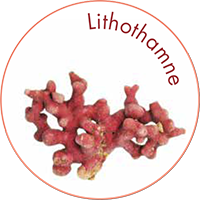
Lithothamnium as the main excipient
An excipient is a "neutral" substance that is part of the composition of a food supplement or medication, used in its manufacturing.
Its role is to improve appearance, ensure preservation, and facilitate the administration and absorption of active ingredients.
Well-known excipients include titanium dioxide, silicon dioxide, and magnesium stearate, which are today widely considered controversial by European authorities.
Equi-Nutri has chosen to use Lithothamnium as an excipient for several reasons:
- Its alkalizing and remineralizing benefits
- It promotes the bioavailability of our active ingredients
- It does not clog up the body (unlike, for example, magnesium stearate, which overloads the liver, contributes to kidney deposits and, over the long term, obstructs the passage of nutrients through the intestinal wall)
- It is micronized to increase its bioavailability