Nutritherapy
Linus Pauling
The term "orthomolecular", coined in 1968 by Linus Pauling, means "correct molecule" in the sense of "not foreign to the human body, biologically correct". Other molecules (the active ingredients of most medications) are seen as biologically incorrect; their chemical resemblance to legitimate substances allows them to interact with the body's molecules, but since they are not identical to the molecules they mimic, they cause dysfunctions (side effects)
Linus Pauling,
Nobel Prize in Chemistry,
inventor of the term orthomolecular
The physiological carrier
It is the nature of the carrier that dictates to the molecule the preferred site for releasing the mineral.
Pidolate
Pidolic acid, or pidolate, is a natural amino acid found in plants and in the human body. It is naturally present in all our organs and, as such, is perfectly integrated into our metabolism. It takes part in our metabolism, which promotes its assimilation and the speed of its performance as a mineral supply.
a) Ionization:
The ionization of minerals (the mineral receives a positive charge, thereby promoting cellular penetration) is essential for good digestive absorption. The acidic environment of the stomach promotes the dissociation of pidolic acid.
This dissociation, occurring as early as the stomach, allows for 90% ionization of the minerals. Thanks to this near-complete reaction, the positively charged ions (cations) and pidolic acid can then penetrate the epithelial cells of the small intestine from its very first section.
b) Cellular penetration of pidolic acid:
The duodenum is the part of the small intestine that offers the most receptors for nutrient uptake into cells. From the small intestine, they enter the bloodstream and spread throughout the body.
Thanks to dissociation occurring as early as the duodenum, absorption is nearly complete and leaves no waste in the body, thereby sparing the kidneys from fatigue.
Beyond its facilitated entry into the cell, pidolate doesn't stop there. It has the very particular ability to also cross the double layer of the mitochondrial membrane. It is at the heart of these energy powerhouses of the cell that it takes part in the Krebs cycle.
The advantages of pidolates
- 100% plant-based origin (beets)
- GMO-free
- Naturally present in our body
- Easily integrate into digestion
- Easily integrate into the bloodstream from the small intestine
- Integrate into the cell's energy metabolism
- Highly effective due to their fast action, quickly making up for mineral deficiencies.
- Leave no waste in the intracellular environment
- Safe, stable and non-toxic, suitable for children and pregnant women
- Optimal bioavailability
- Resistant to passage through the stomach
- Do not compete with other salts
- 100% compatible with vegetarian diets.
The excipient, our key difference
Lithothamnium
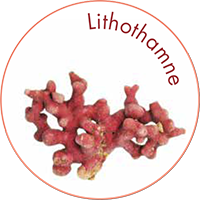
Lithothamnium, a European marine algae, contains particularly high levels of calcium, sodium, iodine, sulfur, iron, magnesium, boron, copper, cobalt, nickel, selenium, zinc and silver.
It is a highly effective food supplement which, when combined with mineral substances or vitamins, provides an undeniable added benefit.
This is why a large majority of Equi-Nutri's formulas are made with Lithothamnium.
Its pH is indeed particularly alkaline, allowing it to offset the body's acidity. Our diet (sugar, fats, coffee, etc.) is a source of acidity that underlies numerous ailments.
Lithothamnium's ability to reduce tissue acidification meets the needs of the entire population and addresses the accompanying inflammatory conditions (arthrosis, cancer, colitis, or stress-related conditions).
The Equi-Nutri advantages
- Nutrients with high doses of stable, naturally derived active ingredients
- Range compliant with European standards (NUT/PL)
- Innovative and unique formulas
- Range of minerals in pidolate form
- Products free of: GMOs, gluten, nanoparticles, titanium dioxide, silicon dioxide, magnesium stearate
- Plant-based capsules
- Packaged in dark (UV-protective), sealed jars
The extra product advantage: Lithothamnium as the sole excipient
An excipient is a "neutral" substance that is part of the composition of a food supplement or medication, used in its manufacturing.
Its role is to improve appearance, ensure preservation, and facilitate the administration and absorption of active ingredients.
Well-known excipients include titanium dioxide, silicon dioxide, and magnesium stearate, which are today widely considered controversial by European authorities.
Equi-Nutri has chosen to use Lithothamnium as an excipient for several reasons:
- Its alkalizing and remineralizing benefits
- It promotes the bioavailability of our active ingredients
- It does not clog up the body (unlike, for example, magnesium stearate, which overloads the liver, contributes to kidney deposits and, over the long term, obstructs the passage of nutrients through the intestinal wall)
- It is micronized to increase its bioavailability